


A tirapazamine-assembled phototherapy agent for combined chemotherapy, photodynamic therapy, and photothermal therapy of hepatocellular carcinoma in mice
 *c
and
*c
and
Abstract
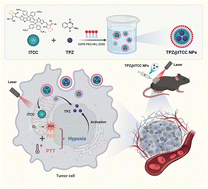
Hypoxia is a pervasive and spatially heterogeneous hallmark of hepatocellular carcinoma (HCC) that drives therapy resistance and motivates the use of hypoxia-activated prodrugs (HAPs) such as tirapazamine (TPZ). To synchronize hypoxia-activated chemotherapy with photodynamic therapy (PDT) and photothermal therapy (PTT) in a formulation-simplified manner, TPZ@ITCC nanoparticles (TPZ@ITCC NPs) are constructed via co-assembly of an A–D–A-type organic photovoltaic phototheranostic molecule (ITCC) with TPZ, enabling a single-laser photochemotherapy concept. TPZ@ITCC NPs retain near-infrared optical features and exhibit irradiation-dependent reactive oxygen species (ROS) generation together with robust photothermal performance. In Hepa1-6 cells, laser irradiation induces pronounced phototoxicity accompanied by intracellular ROS elevation and mitochondria-associated dysfunction. Under hypoxia, TPZ@ITCC NPs show enhanced cytotoxicity, and laser exposure further increases this effect, supporting cooperative phototherapy-assisted activation of TPZ. In a HCC-bearing mouse model, TPZ@ITCC NPs enable fluorescence visualization and tumor-localized heating under 635 nm irradiation and achieve significant tumor suppression with no obvious systemic toxicity. TPZ@ITCC NPs therefore provide a single-wavelength-activatable nanoplatform that integrates tumor-localized PDT/PTT with hypoxia-activated chemotherapy for treating hypoxic HCC.
 Please wait while we load your content...


