


A self-healing injectable PF127-gelatin bioadhesive sealant with antioxidant and antibacterial activities for accelerated oral ulcer repair

Abstract
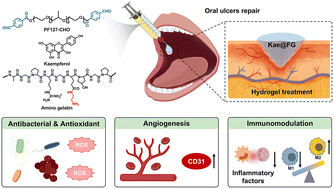
Oral ulcers remain difficult to treat owing to the mechanically dynamic and microbially rich oral environment, where constant shear forces, microbial challenge, and oxidative stress collectively impede mucosal repair. Here, we report a versatile injectable self-healing bioadhesive hydrogel sealant (F127-AG) based on dynamic Schiff-base crosslinking between aldehyde-modified Pluronic F127 (PF127-CHO) and amine-functionalized gelatin (AG), enabling rapid in situ gelation, strong wet tissue adhesion, and intrinsic self-healing. Kaempferol was incorporated into the hydrogel matrix, and the resulting Kae@FG hydrogel exhibited antioxidant and antibacterial activities. In vitro, Kae@FG exhibited excellent hemocompatibility and cytocompatibility, promoted fibroblast migration, and degraded favorably in artificial saliva. Additionally, it effectively scavenged reactive oxygen species and displayed potent bactericidal activity against both E. coli and S. aureus. In a rat oral ulcer model, Kae@FG accelerated wound closure, enhanced epithelial regeneration, improved collagen deposition, and promoted neovascularization, outperforming the commercial GENGIGEL®. Mechanistically, Kae@FG exerted an immunomodulatory effect by attenuating local inflammation, reducing neutrophil and M1 macrophage infiltration, and promoting M2 macrophage polarization, thereby supporting a pro-regenerative microenvironment. Overall, the F127-AG platform represents a versatile therapeutic delivery system with substantial potential for promoting regeneration of oral and other soft tissues.
- This article is part of the themed collection: Wound healing materials
 Please wait while we load your content...


