


Aloe vera and Sterculia gum-based hydrogel for use in drug delivery and dressing applications to improve wound healing
 *a
*a
Abstract
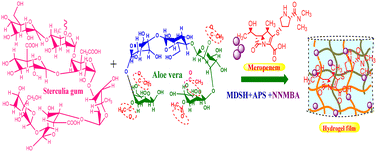
Recently, significant advancements have been made to develop functional materials from bioactive polysaccharides for use in healthcare products and biomedical applications. Aloe vera (AV) and Sterculia gum (SG) polysaccharides exhibit inherent antioxidant, anti-inflammatory, and anti-microbial activities. In the present study, these bioactive AV and SG polysaccharides were explored for the design of network hydrogels by integrating a zwitterionic polymer via covalent and supramolecular interactions. Their subsequent encapsulation with an antibiotic drug for drug delivery (DD) and wound dressing (WDR) applications signifies the novel aspects of the present work. The physico-chemical properties of the hydrogel were correlated with mechanistic structural implications for biomedical uses. The hydrogel was characterized by field emission scanning electron microscopy (FESEM), energy dispersive X-ray spectroscopy (EDS), atomic force microscopy (AFM), solid-state 13carbon nuclear magnetic resonance (13C-NMR) spectroscopy, Fourier transform infrared (FTIR) spectroscopy, X-ray diffraction (XRD), thermogravimetric analysis (TGA) and differential scanning calorimetry (DSC) techniques. Wound fluid sorption, DD, biocompatibility, mucoadhesion, antioxidant, permeability, mechanical, antimicrobial and cell viability or cytotoxicity properties of the hydrogel were also analyzed. FESEM and AFM analyses revealed an uneven heterogeneous morphology with rough topological features. EDS confirmed the inclusion of a zwitterionic polymer in the hydrogel, which was further supported by 13C-NMR and FTIR spectroscopy. TGA and DSC illustrated the thermal stability of the copolymer. The release of the meropenem drug from the dressing occurred in a sustained manner and exhibited a non-Fickian diffusion mechanism. The drug release data were best explained by the Korsmeyer–Peppas kinetic model. The results of the hemolysis (2.94% ± 0.33%) and cell viability (103% ± 1.1%) properties demonstrated the biocompatible and nontoxic nature of the hydrogel. The hydrogel also exhibited significant antioxidant activity and permeability to oxygen and water vapour, necessary to maintain a moist surrounding at the wound site. The hydrogel displayed a tensile strength of 2.19 ± 0.19 N mm−2 and a burst strength of 31.55 ± 0.68 N, providing structural integrity properties necessary for easy handling, storage and administration. Overall, the results of fluid sorption, DD, biocompatibility, permeability and elasticity properties demonstrated the suitability of the hydrogel for WDR applications.
- This article is part of the themed collection: Wound healing materials
 Please wait while we load your content...


