


Designing of porous scaffolds for tissue engineering and regenerative medicine

Abstract
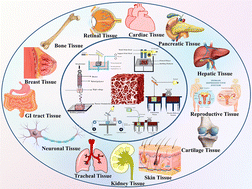
The potential of the porous scaffolds lies in its dynamic architectural features, such as porosity, pore size & shape, interconnectivity, and spatial distribution which are highly essential in tissue engineering applications. The porous structure of the scaffolds influences the biological and physicochemical activities in the tissue regeneration process. The porosity also allows better distribution of nutrients and diffusion of biological fluids thereby dispersing the seeding material uniformly. Generally, damaged tissues can be regenerated on their own but many times due to unavoidable factors, the healing process slows down or even gets impaired and is impossible to heal. Therefore, it is necessary to design and functionalize porous scaffold with different biomolecules for specific tissues, that can enhance its biomimetic property. In this review, the importance of designing porous scaffold and their fabrication process by using various traditional, advanced and combinatorial techniques have been discussed. Furthermore, specific applications for tissue regenerative ability in damaged tissues like bone, cartilage, trachea, skin, nerve, retina, cardiac, pancreatic, breast, GI tract, hepatic, kidney and reproductive tissues have been discussed in detail.
- This article is part of the themed collection: Journal of Materials Chemistry B Recent Review Articles
 Please wait while we load your content...


