


Green biomineralization of magnetic metal ions: comparative mechanisms and emerging applications
 *ab
*ab
Abstract
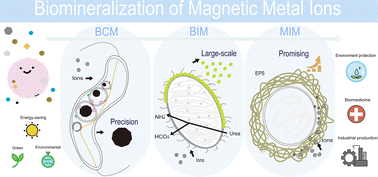
Microbial-mediated biomineralization of magnetic metal ions is a sustainable, versatile alternative to traditional physical/chemical synthesis of magnetic nanomaterials, offering environmental benignity, structural tunability, and functional diversity. In this review, we systematically compare and integrate the three principal biomineralization mechanisms—biologically controlled mineralization (BCM), biologically induced mineralization (BIM), and microbially influenced mineralization (MIM)—to address the current imbalance in the literature, which has historically emphasized BCM while insufficiently covering BIM and MIM. BCM enables precise control over nanoparticle properties, suiting high-value biomedical applications but facing limitations in scalability. BIM, in contrast, leverages microbial metabolic activities to modulate local chemical microenvironments, enabling cost-effective and scalable magnetic mineral production, albeit with reduced structural precision. MIM operates through extracellular polymeric substances (EPS) and physicochemical interactions that template mineral growth, offering morphological flexibility but remaining at an early developmental stage. We summarize key applications in biomedicine, environmental remediation, and industrial production, highlighting critical cross-cutting challenges including scalability, batch consistency, and translational barriers. Future advancements will rely on synthetic biology, AI-driven optimization, and genetic engineering to reconcile precision, scalability, and multifunctionality. This review offers a comprehensive framework to guide the industrial translation and interdisciplinary development of microbial-mediated magnetic biomineralization.
- This article is part of the themed collection: Journal of Materials Chemistry B Recent Review Articles
 Please wait while we load your content...


