


Porous aromatic framework-based sequential therapeutic strategy for the treatment of periodontitis
 *b
and
*b
and
Abstract
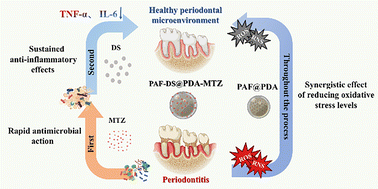
Periodontitis is a chronic inflammatory disease caused by the interaction between oral microorganisms and the host's immune response. The vicious cycle between bacterial infection and the host immune response renders any single treatment strategy ineffective. Therefore, a sequential approach that first rapidly eradicates pathogens, followed by anti-inflammatory therapy, is undoubtedly preferable. However, sequential release often needs to the release of several drugs in a controlled order over a long period of time, so it is necessary to rely on drug carriers, which must have a large drug loading capacity and maintain long-term stability. Compared to other drug carriers, the properties of porous aromatic frameworks (PAFs) precisely meet these requirements, and PAF-82 was employed. By sequentially loading diclofenac sodium (DS), coating with polydopamine (PDA) and adsorbing metronidazole (MTZ), PAF-DS@PDA-MTZ was constructed. The experimental results showed that PAF-DS@PDA-MTZ could quickly kill Porphyromonas gingivalis (P. g.) and eliminate ROS inhibition of pro-inflammatory factors, such as TNF-α and IL-6. Validation in a rat periodontitis model confirmed the system's efficacy in reducing alveolar bone resorption and enhancing periodontal healing efficiency. This strategy of coordinating antibacterial and anti-inflammatory effects through the temporal regulation of drug release provides a novel therapeutic approach for bacteria-driven diseases.
 Please wait while we load your content...


