


Green synthesis of a bacitracin@Ag–CeO2 nanocomposite@hydrogel for dual antibiofilm and anti-inflammatory therapy against MRSA wound infections
 *aci
*aci
Abstract
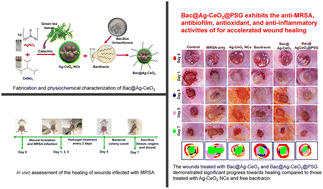
Skin wound healing is a complex and tightly regulated process. Bacterial biofilm infection in wounds further complicates and delays skin recovery. Here, green synthesis was used to develop a novel poly(vinyl alcohol)–sodium alginate–gelatin (PSG) hydrogel impregnated with nanocomposites comprising Ag–CeO2 and bacitracin, which exerted synergistic antibacterial and anti-inflammatory effects to accelerate the healing of infected wounds. The synthesized nanoformulations were identified using combined characterization of particle size, surface charge, Raman spectrum, porosity, water absorption, and adhesion strength. The hydrodynamic diameter of Ag–CeO2 nanoparticles increased from 57 to 95 nm after bacitracin incorporation. Compared with the single treatments, the combination of Ag–CeO2 and bacitracin (Bac@Ag–CeO2) effectively inhibited methicillin-resistant Staphylococcus aureus (MRSA) growth in both planktonic and biofilm forms. Compared with the untreated control, Bac@Ag–CeO2 reduced the MRSA burden inside the biofilm by 4 log. This nanocomposite also decreased the biofilm thickness by 3-fold. A keratinocyte-based study demonstrated that the combination of Ag–CeO2 and bacitracin synergistically inhibited cytokine/chemokine expression through antioxidant effects. The intracellular MRSA count decreased by approximately 3-fold in the Bac@Ag–CeO2 group. MRSA-infected full-thickness wounds in mice were validated to exhibit accelerated healing after topical treatment with the nanocomposite-loaded hydrogel (Bac@Ag–CeO2@PSG). Compared with the control, this nanosystem resulted in less scarring, a smaller wound area, and the recovery of barrier function. A remarkable increase in epidermal thickness was observed after the topical application of Bac@Ag–CeO2@PSG, suggesting an accelerated proliferation phase for re-epithelialization. A cytotoxicity assay and an in vivo skin tolerance study verified that negligible irritation was produced by the nanosystem. The newly designed nanoformulation may be a promising candidate for skin wound care.
 Please wait while we load your content...


