


Injectable hydrogel-based localized delivery of IDO-galectin-3 mitigates neuroinflammation and promotes neuronal sparing after spinal cord contusion in rats

Abstract
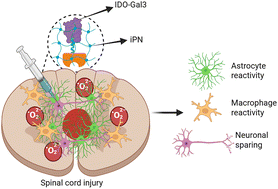
Traumatic spinal cord injury (SCI) results in excessive neuroinflammation characterized by secondary injury cascades, which in turn hinders axonal regeneration and impairs functional recovery. Here, we sought to deliver an anti-inflammatory enzyme, indoleamine 2,3 dioxygenase (IDO), as a potential therapy to reduce the inflammatory burden and foster improved neural regeneration following SCI. IDO has previously been shown to decrease local inflammation in periodontal and osteoarthritis models; however, its potential to mitigate neuroinflammation is still unexplored. In this study, we evaluated the therapeutic potential of an engineered form of human IDO fused to galectin-3 (IDO-Gal3). Galectin-3 binds to extracellular glycans, including those on proteoglycans known to be overexpressed at the injury site, prolonging local retention of the enzyme. This fusion construct was delivered via an injectable hydrogel derived from decellularized rat peripheral nerve tissue (iPN) in a thoracic contusion SCI rat model. Combined delivery of IDO-Gal3 with the iPN hydrogel (iPN + IDO-Gal3) significantly reduced both astrocyte and macrophage reactivity, mitigating neuroinflammation and cystic cavity formation. Ex vivo magnetic resonance imaging (MRI) revealed that this combination treatment resulted in increased neuronal sparing of the corticospinal tract compared to either IDO-Gal3 or iPN alone. While no statistical difference was observed in Basso, Beattie, and Bresnahan or horizontal ladder locomotor assessments, rats treated with iPN + IDO-Gal3 exhibited more weight-supported steps, coordinated movement, and plantar paw accuracy. Collectively, these findings suggest that the localized delivery of IDO-Gal3 through a pro-regenerative hydrogel delivery vehicle is a promising strategy to attenuate neuroinflammation and support axonal preservation following SCI.
- This article is part of the themed collection: In honour of Shelly Sakiyama-Elbert’s 50th birthday: Shaping biomaterials in neuroengineering
 Please wait while we load your content...


