


Unveiling the potential of pristine and metal-doped biochar for improved fermentative biohydrogen production from whey wastewater

Abstract
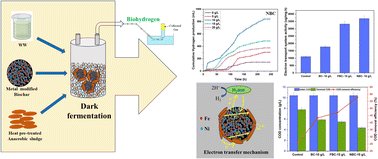
Conductive materials are crucial for electron transfer during the hydrogen fermentation process. In the present study, pristine and metal-doped (Fe and Ni) animal waste-derived biochar (BC) was synthesized and utilized as a catalyst in dark fermentative hydrogen production while simultaneously improving whey wastewater treatment. The structural and morphological characteristics of the synthesized BC materials were systematically characterized. Ni-doped BC (NBC) exhibited a maximum hydrogen yield of 323 ± 9.7 mL H2 per g COD, 5-fold higher than the control (55.7 ± 1.6 mL g−1 COD). The NBC reactor achieved the highest protein (1141 ± 57 µg mL−1) and polysaccharide (669.4 ± 33.4 µg mL−1) concentrations and electron transport system activity (3694.5 ± 184.7 µg mg−1 h−1), indicating that Ni doping enhanced the conductivity and redox activity of BC, promoting extracellular electron transfer and thereby enhancing hydrogen production. An acetate-type metabolic pathway was observed in the NBC system through soluble metabolite distribution analysis. These results identify NBC as a promising catalyst for coupling elevated hydrogen generation with effective organic matter removal in dark fermentation, representing an environmentally sustainable approach.
- This article is part of the themed collection: Advanced Nanomaterials for Sustainable Green Hydrogen Production
 Please wait while we load your content...


