


A glucose-mediated independent pyrolysis strategy optimises the pore structure of MOF-derived carbon catalysts to promote the conversion of HMF to FDCA

Abstract
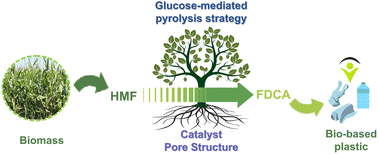
2,5-Furandicarboxylic acid (FDCA) is a key platform chemical that can be sustainably produced via the catalytic selective oxidation of biomass-derived 5-hydroxymethylfurfural (HMF). Utilizing metal–organic framework (MOF)-derived carbon-based catalysts has proven to be an effective strategy for this production. In this study, we incorporated glucose-modified catalytic pore structures into Cu-based MOFs to modulate the pore architecture of MOF-derived carbon catalysts. This approach operates independently of MOF synthesis, simultaneously supplementing the pore structure during pyrolysis of the MOF skeleton. Glucose acts as a sacrificial structural component during pyrolysis, synergistically regulating carbonization behaviour and pore structure evolution, thereby markedly enhancing mass transport properties and improving the accessibility of active sites. Glucose-induced co-construction of specific pore structures in the Cu-based MOF framework was critical for tuning catalyst activity. Under optimized conditions, the optimal catalyst achieved 100% HMF conversion and 94.70% FDCA selectivity. Notably, this catalyst exhibited a six-fold enhancement in FDCA selectivity in ambient air compared to catalysts without glucose modification, while maintaining a stable FDCA yield of 50% over 11 cycles without significant deterioration. This work underscores the importance of mesoporous structures and chemical properties in catalyst design, thereby advancing the fundamental understanding of organic transformation reactions.
 Please wait while we load your content...


