


Synergistic regulation of bulk and interfacial properties in PEO electrolyte using CaF2 for stable lithium metal batteries

Abstract
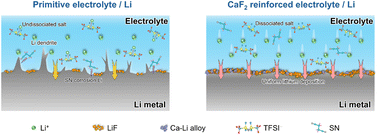
The advancement of all-solid-state lithium metal batteries (ASSLMBs) with high energy density is significantly constrained by the inherent drawbacks of solid polymer electrolytes (SPEs), such as low room-temperature ionic conductivity, inadequate mechanical strength to prevent lithium dendrite growth, and unstable interfaces between electrodes and electrolytes. To overcome these limitations, this study introduces a synergistic modification strategy for poly(ethylene oxide) (PEO)-based SPEs by incorporating calcium fluoride (CaF2), aiming to concurrently improve bulk electrolyte properties and interfacial stability. The introduction of CaF2 effectively inhibited the crystallization of PEO by steric hindrance and Lewis acids, which made the ionic conductivity of the electrolyte reach 8.49 × 10⁻⁵ S cm−1 at 40 °C (70% higher than that of the original electrolyte), and the lithium-ion migration number increased to 0.34. The composite electrolyte also demonstrates improved mechanical robustness (yield strength of 1.61 MPa) and electrochemical stability window (with the decomposition voltage elevated to 5.01 V), enabling a critical current density of 0.8 mA cm−2. Theoretical and experimental investigations reveal that CaF2 promotes the formation of a hybrid solid electrolyte interphase (SEI) enriched with LiF and Ca–Li alloys, which guides uniform lithium deposition. As a result, Li symmetric cells achieve stable cycling over 1600 hours, and LiFePO4‖Li full cells retain 98.1% of their initial capacity after 300 cycles at 0.5C. This work offers a scalable pathway for designing dendrite-suppressing SPEs through dual optimization of bulk and interfacial characteristics.
 Please wait while we load your content...


