


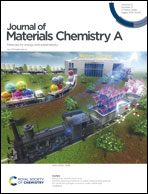
Micro-supercapacitors for smart transportation and low-altitude economy applications: advances in material innovations, device architectures, and system integration
 *abc
*abc
Abstract
The rapid evolution of intelligent transportation and low-altitude economy systems imposes stringent demands on reliable energy storage technologies. Micro-supercapacitors (MSCs) have emerged as promising power sources for highly dynamic applications, including the take-off and landing of miniaturized unmanned aerial vehicles, owing to their lightweight design, high power output, extended cycle life, and inherent safety. Nevertheless, a review dedicated to examining the role of MSCs in emerging fields such as smart transportation and low-altitude economy systems has not yet been thoroughly undertaken. In this review, we systematically examine recent advancements in MSCs by mapping material innovations, electrolyte engineering, and device architectures directly onto low-altitude application-driven challenges: handling high-power pulses, ensuring all-climate operation, achieving lightweight and structural integration, guaranteeing intrinsic safety, and powering distributed micro-systems. Equally important, the integration of MSCs as structural components, control systems, and self-powered modules into system-level smart transportation vehicles is discussed, highlighting their roles as power buffers, distributed micro-sources, and enablers of multifunctional, symbiotic energy systems. Finally, current challenges and future directions tailored for the practical deployment of MSCs in autonomous, efficient, and reliable smart transportation and low-altitude aerial platforms are outlined.

- This article is part of the themed collections: Journal of Materials Chemistry A HOT Papers and Journal of Materials Chemistry A Recent Review Articles
 Please wait while we load your content...


