


Investigation on the deactivation periods of ZSM-5/SAPO-34 catalysts in MTA reactions: an impact of product distribution
 *abc
Xianliang
Meng,
*abc
*abc
Xianliang
Meng,
*abc
Abstract
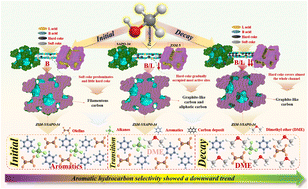
This research takes the independently developed MFI-CHA catalytic material (ZSM-5/SAPO-34) as the research object. The entire reaction cycle is divided into three periods based on the changes in catalytic activity: initial (0–12 h), transition (12–18 h) and decay (18–25 h) periods. Various characterizations such as SEM, XPS, GC-MS, TG analysis, Py-IR studies, and in situ IR spectroscopy were used to systematically analyze the relationship between the evolution of carbon deposits and product distribution. The results showed that the evolution of carbon deposits in different periods had a significant effect on the surface acid centers and pore structure characteristics. Coke formation in the initial period did not affect the diffusion of channels, and the stable acid sites allowed methanol to maintain excellent product selectivity. The increase in carbon deposition in the transition period resulted in the coverage of a large amount of B acid active sites, hindered aromatization, and affected product selectivity, and the rapid deactivation of L acid sites resulted in partial non-catalytic conversion of methanol into DME. A surge in carbon deposits clogs the mesoporous channels, forcing the carbon precursors into the micropores during the decay period, where residual Brønsted acid sites cause their over-condensation into a graphitized carbon layer. The channel diffusion was limited, the product selectivity dropped sharply, DME increased rapidly, and the catalytic material tended to be completely deactivated. This study provides an important theoretical basis for understanding the dynamic relationship between the evolution of carbon deposits and product selectivity in the MTA reaction.
 Please wait while we load your content...


