


Accelerated electrochemical nitrate-to-ammonia conversion over bimetallic Ni2Mo3N with mechanistic insights

Abstract
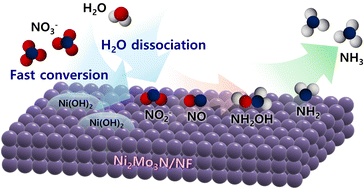
In this study, bimetallic nickel molybdenum nitride supported on nickel foam (Ni2Mo3N/NF) was developed as a highly efficient electrocatalyst for electrochemical nitrate reduction to ammonia (NO3−RR). Ni2Mo3N/NF delivered a remarkable faradaic efficiency (FE) of 97.72% and a maximum ammonia yield of 5.55 mg h−1 cm−2, significantly outperforming bare nickel foam. Moreover, Ni2Mo3N/NF maintained a high FE of NH3 during consecutive cycling tests, accompanied by the formation of an amorphous Ni(OH)2 layer through surface reconstruction. Mechanistic investigations revealed that Ni components in Ni2Mo3N/NF accelerate the conversion of NO3− to NO2− during the NO3−RR by forming an amorphous Ni(OH)2 layer on the catalyst surface, and Mo–N species facilitate the subsequent reduction of NO2− to NH3. Furthermore, online differential electrochemical mass spectrometry (DEMS) analysis confirmed the reaction pathway of sequential deoxygenation (*NO3− → *NO2− → *NO), followed by hydrogenation (*NO → *NH2OH → *NH3). These findings highlight the synergistic roles of Ni and Mo in boosting the NO3−RR, offering mechanistic insights for the rational design of high-performance bimetallic catalysts for sustainable NH3 production.
 Please wait while we load your content...


