


Robust conductive gel-infused sponge-based triboelectric nanogenerator for reliable self-powered electronics and wireless monitoring
 *ab
*ab
Abstract
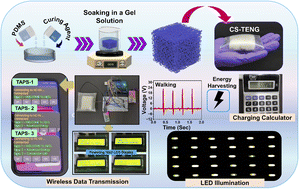
Conducting hydrogel-based triboelectric nanogenerators (TENGs) have garnered significant interest for their inherent flexibility and biocompatibility. However, their practical deployment is severely constrained by poor mechanical integrity and limited operational lifespans. Addressing these limitations, we report a mechanically robust and stable conductive sponge-based TENG (CS-TENG), engineered via a simple, scalable, and cost-effective approach. The device architecture is based on a sugar-templated polydimethylsiloxane (PDMS) sponge infiltrated with an ionic conductive gel comprising polyvinyl alcohol (PVA) and sodium nitrate (NaNO3), followed by a controlled thermal curing process. This strategy dramatically enhances the electrical conductivity of the sponge to 649.28 mS m−1, which is more than three orders of magnitude higher than that of the untreated structure (0.185 mS m−1). The resulting CS-TENG demonstrates exceptional energy harvesting performance, generating a stable output of 61 V and 1.6 µA, with no degradation observed over six months of continuous operation. Moreover, the device is capable of directly powering 30 LEDs and seamlessly integrating with wireless platforms to operate 7-segment displays, LCDs, and smartphones. This work introduces a robust design for the development of high-performance TENGs, offering a promising pathway toward next-generation self-powered and wearable multifunctional electronic systems.
 Please wait while we load your content...


