


Self-healing hybrids via dual noncovalent networks using urethane/imidazole–zinc functionalized silsesquioxane nanoparticles

Abstract
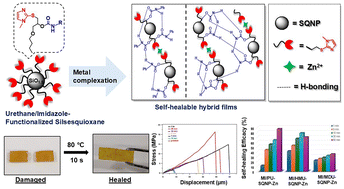
This study presents the design of imidazole/urethane-functionalized silsesquioxane nanoparticles (SQNPs) that enable rapid self-healing through dynamic Zn–imidazole coordination and hydrogen bonds. Methylimidazole/hydroxyl-functionalized SQNPs (MI/OH-SQNPs) were prepared using epoxy-functionalized SQNPs and reacted with structurally diverse isocyanates, phenyl isocyanate (PU), hexamethylene diisocyanate (HMU), and methylenediphenyl diisocyanate (MDU), to yield MI/PU-, MI/HMU-, and MI/MDU-SQNPs, respectively. Extensive characterization (using nuclear magnetic resonance, Fourier-transform infrared (FT-IR) spectroscopy, size-exclusion chromatography, differential scanning calorimetry, thermogravimetric analysis, X-ray diffraction analysis, transmission electron microscopy, and atomic-force microscopy) showed a uniform dispersion of approximately 10 nm, an amorphous structure, excellent solubility, and good thermal stability (>230 °C). The drop-cast films of the imidazole/urethane-SQNP-Zn hybrids exhibited flexural moduli of 1.52, 1.86, and 4.08 GPa for MI/PU-, MI/HMU-, and MI/MDU-SQNPs, respectively, reflecting the effects of urethane linker rigidity, crosslink density, and covalent/noncovalent interactions. MI/PU-SQNP-Zn formed dual noncovalent networks combining hydrogen bonding and metal–ligand coordination, providing moderate stiffness with increased toughness. In contrast, MI/MDU-SQNP-Zn, which contained rigid aromatic segments, exhibited the highest modulus and strength. Zn coordination was confirmed via FT-IR spectroscopy, and transparent films (up to 99.6% transmittance at 400 nm) were produced. The formation of mechanically robust hybrid networks was confirmed via dynamic mechanical analysis, highlighting its ability to maintain structural integrity while allowing dynamic bond exchange. Scanning electron microscopy–energy dispersive spectroscopy confirmed the successful incorporation and uniform distribution of Zn within all hybrid networks. These Zn-complexed systems exhibited promising self-healing performances: MI/PU-, MI/HMU-, and MI/MDU-SQNP-Zn hybrids achieved ∼87%, ∼78.5%, and ∼35% recovery of their mechanical integrity, respectively, which was governed by the flexibility or rigidity of the urethane segments. Additionally, MI/PU-SQNP-Zn demonstrated rapid thermal self-healing, recovering approximately 68% of its strength within 60 min at 50 °C and visibly healed in 10 s at 80 °C. These findings indicate that Zn-coordinated imidazole–urethane SQNPs offer a versatile platform for creating mechanically robust self-healing hybrid materials with promising applications in coatings, glassy materials, and functional composites.
 Please wait while we load your content...


