


 PLATFORM UPDATE:


Self-healing photothermal antibacterial hydrogels constructed through multiple dynamic chemical bonds
 *a
*a
Abstract
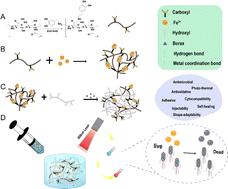
Hydrogels, with their highly hydrophilic, three-dimensional polymer network structure, offer great potential as antimicrobial biomedical materials. However the overuse of antibiotics has led to drug-resistant bacteria, highlighting the need for multifunctional biomaterials that do not rely on antibiotics to combat infections. In this study, a multifunctional photothermal antimicrobial hydrogel (PHDF hydrogel) was synthesized using a one-pot method from polyvinyl alcohol, borax, dopamine-grafted hyaluronic acid, and ferric chloride. The hydrogel's self-healing properties were achieved through the formation of borate bonds between polyvinyl alcohol and borax, metal–ligand bonds between dopamine and Fe3+, and hydrogen bonds between macromolecules, prolonging its action time. The catechol–Fe3+ complex demonstrated outstanding photothermal antibacterial performance, achieving approximately 99% antibacterial efficacy against Staphylococcus aureus and Escherichia coli upon exposure to near-infrared light. In addition, the hydrogel has adjustable rheological properties, antioxidant properties, tissue adhesion, injectability and good hemocompatibility and cytocompatibility, making it a promising antimicrobial material.
 Please wait while we load your content...


