


Ferrocenyl carboxylate-mediated electrode/electrolyte dual-phase molecule engineering for efficient and durable electrochemical oxygen evolution reaction
 *a
Minghui
Cao
*a
*a
Minghui
Cao
*a
Abstract
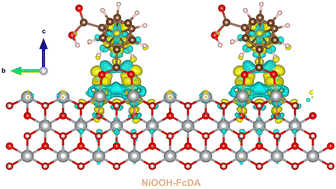
The unique organic–inorganic hybrid biomimetic interaction between carboxylate molecules, particularly ferrocene dicarboxylic acid (FcDA) containing unconventional Fe atoms, and Ni metal centers exhibits a significantly favorable effect on the alkaline oxygen evolution reaction (OER). However, the inherent high solubility of carboxylate molecules in alkaline electrolytes often undermines the long-term structural stability of these biomimetic materials. Therefore, electrode/electrolyte two-phase molecular engineering mediated by ferrocenyl carboxylate significantly enhances both the OER performance and the durability of Ni metal centers. The experimental results demonstrated that ferrocenyl carboxylate acts as a proton acceptor and serves as an efficient proton transfer mediator during the OER process. Moreover, density functional theory (DFT) calculations further revealed that the incorporation of ferrocenyl carboxylate induced an upward shift in the d-band center of Ni, which consequently promoted the formation of the *OOH intermediate and improved the rate-determining step of OER.
- This article is part of the themed collection: 2026 Inorganic Chemistry Frontiers HOT Articles
 Please wait while we load your content...


