


Simple synthesis of high-yield monocrystalline gold nanoplates as reinforcement to enhance the EMI shielding performance of the carbon nanotube matrix

Abstract
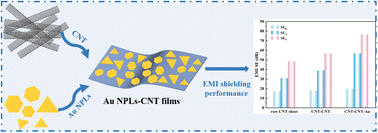
In this study, we propose a simple template-free synthesis method to obtain high-yield and size-tunable monocrystalline gold nanoplates and systematically investigate their influence factors and growth mechanism. The synthesis only simply utilizes two chemicals in the whole hydrothermal process: dimethyl sulfoxide (DMSO) and chloroauric acid (HAuCl4). By adjusting the concentration of DMSO and HAuCl4, precise control of the size of gold nanoplates (5–20 μm of the side and 50–100 nm of the thickness) has been achieved. Their growth mechanism in a surfactant-free medium has been presented and discussed based on the results of time-lapsed high-resolution transmission electron microscopy (HRTEM) and scanning transmission electron microscopy (STEM)/energy-dispersive X-ray spectroscopy (EDX). The hydrolysis product HAuCl4 forms an unstable complex with DMSO and the trivalent gold generated from bond cleavage further undergoes disproportionation reactions, leading to the formation of stable gold nanoparticles on the surface of the soft membrane board, which eventually grow into gold nanosheets, with HAuCl4 acting as the gold precursor and DMSO serving as a reducing agent and shape-directing agent. To present the robust function of these nanoplates, we have applied gold nanoplates to CNT films and used the rolling process to prepare CNT/AuNPL composites. Excellent EMI shielding (76 dB in 8–12.4 GHz) was achieved. This research not only provides new insights into the design of high-performance light weight shielding materials, but also lays a technical foundation for solving the metallization challenges of highly chemically inert substrates, contributing significantly to the advancement of 5G high-frequency communication and aerospace electromagnetic protection technologies.
 Please wait while we load your content...


