


 PLATFORM UPDATE:


A cleavage-type pyrrolyl enone photoinitiator enables photobleaching-regulated uniform thick-film photopolymerization
 *a
Zhiceng
Fu
*b
*a
Zhiceng
Fu
*b
Abstract
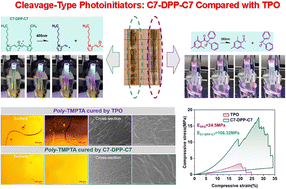
Cleavage-type visible-light photoinitiators capable of efficient photobleaching and uniform thick-film curing remain rarely explored. Herein, we report a novel N-alkyl-substituted pyrrolyl enone photoinitiator, C7-DPP-C7, and investigate its photoinitiation mechanism and curing performance under 405 nm LED irradiation. Steady-state photolysis, phosphorescence spectroscopy, EPR analysis, and 1H NMR characterization of the photolysis products collectively support a cleavage-type pathway in which C7-DPP-C7 undergoes C–C bond scission between the carbonyl group and the α,β-unsaturated segment, generating reactive radical species through photocleavage. This cleavage process simultaneously disrupts the conjugated chromophore, thereby inducing rapid photobleaching during irradiation. In the photopolymerization of TMPTA, C7-DPP-C7 achieves a double-bond conversion of 81% at an ultralow loading of 0.01 wt%, outperforming the commercial photoinitiator TPO under identical conditions. More importantly, the gradual disruption of the conjugated chromophore during irradiation progressively increases light penetration depth, thereby promoting uniform propagation of the polymerization front in thick films. As a consequence, the resulting cured polymers exhibit enhanced thermal stability, potentially reduced curing-induced internal stress, and improved mechanical properties compared with those prepared using TPO. These results establish cleavage-type pyrrolyl enones as a promising class of photobleachable visible-light photoinitiators for high-performance thick-section photopolymerization.
 Please wait while we load your content...


