


 PLATFORM UPDATE:


Integrated design of high-performance, recyclable, and antibacterial 3D-printing photopolymers from tannic acid

Abstract
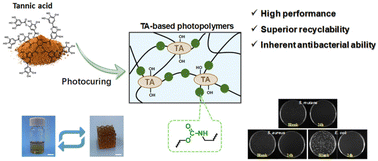
Developing photopolymers with high performance, excellent chemical recyclability, and antibacterial functions simultaneously is a great challenge for advanced 3D printing applications like dental materials. Herein, biobased, recyclable, and antibacterial photopolymers for 3D printing were designed by using natural tannic acid (TA) as the main building block. Photosensitive prepolymers bearing dynamic dissociative phenol–carbamate bonds (PCBs) were synthesized simply via the reaction between TA and isocyanatoethyl methacrylate, followed by blending with biobased tetrahydrofurfuryl methacrylate to form photocurable resins. Notably, the resulting TA-based photopolymers exhibited high biobased contents (46.2%–58.3%) and excellent mechanical and thermal properties, with a maximum tensile strength and glass transition temperature of up to 39.1 MPa and 101.6 °C, respectively. Owing to the dynamic nature of PCBs, the optimized sample could be efficiently recycled through a mixed-monomer assisted recycling strategy while maintaining stable mechanical and thermal performances over multiple cycles. In addition, benefiting from the intrinsic bioactivity of TA, the TA-based resins demonstrated outstanding antibacterial performance against Escherichia coli, Staphylococcus aureus, and Streptococcus mutans, with inhibition efficiencies exceeding 99% without additional antibacterial agents. This work provides an effective, integrated strategy to construct high-performance, recyclable, and antibacterial biobased photopolymers for sustainable 3D printing.
- This article is part of the themed collection: Additive manufacturing of soft materials
 Please wait while we load your content...


