


Non-invasive salivary nicotine detection for oral cancer risk assessment using a point-of-care electrochemical device functionalized with carbon@MXene/Au nanocomposite
 c
and
Ravi Kumar
Arun
*a
c
and
Ravi Kumar
Arun
*a
Abstract
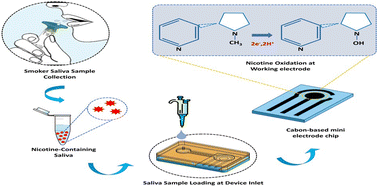
A point-of-care electrochemical sensor based on a Carbon@MXene/Au nanocomposite is developed for non-invasive detection of nicotine in human saliva, enabling early oral cancer risk assessment. The sensing platform incorporates a carbon-based mini electrode chip functionalized with Ti3C2 (Titanium Carbide) MXene/gold nanostructures, along with silver ink and Ag/AgCl printed counter and reference electrodes. The Carbon@MXene/Au architecture integrates the large surface area and conductivity of MXene with gold nanoparticle-induced electrocatalytic activity, creating a highly efficient charge-transfer interface. Electrochemical characterization in 0.1 M phosphate-buffered saline (pH 7.4) demonstrated efficient nicotine oxidation attributed to adsorption through π–π interactions and van der Waals forces on oxygen-functionalized MXene surfaces. The sensor exhibited a broad detection range of 0.1–1000 ng mL−1 with low detection limits of 0.3 ng mL−1 (GCE) and 0.4 ng mL−1 (CBME), showing excellent selectivity, reproducibility, and operational stability. These findings highlight the potential of Carbon@MXene/Au-based miniaturized electrochemical systems for real-time, non-invasive salivary biomarker detection in lab-on-a-chip diagnostic platforms.
 Please wait while we load your content...


