


Tailoring layered double hydroxide nanomaterials through surface modification: design strategies and practical paradigms

Abstract
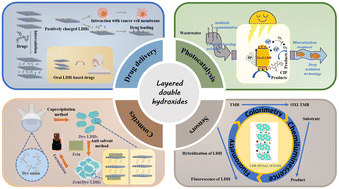
Layered double hydroxides (LDHs) have garnered significant attention in biomedical fields, such as drug delivery and cancer therapy, owing to their unique layered structure and excellent biocompatibility. However, the practical application of pristine LDHs is hindered by inherent limitations, including particle aggregation, inadequate targeting capability, and suboptimal immunogenic properties in vivo. Recent advances in surface functionalization strategies have emerged as a pivotal approach to overcoming these challenges. This review systematically examines the structural characteristics and intrinsic properties of LDHs, followed by a critical analysis of the rationale for their surface modification. We categorize and evaluate both physical and chemical modification techniques, such as BSA coating, silane coupling agent grafting, and modification with small molecules/polymers, with emphasis on their reaction mechanisms, modification efficacy, and respective advantages and limitations. Furthermore, we highlight the applications of modified LDHs in diverse biomedical domains, including stimuli-responsive drug release and precision therapy. Finally, future perspectives are proposed, focusing on multifunctional synergistic modifications and smart responsive designs. Through precise control of surface chemistry, engineered LDHs are expected to open new avenues in biomedicine and environmental energy applications.
 Please wait while we load your content...


