


Molecular interaction modes of the host-defense peptide cathelicidin LL-37 and its mutants dictate diverse antimicrobial activities
 *bc
*bc
Abstract
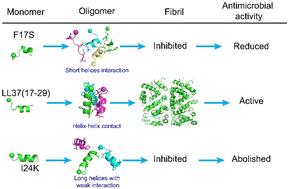
The host-defense peptide cathelicidin LL37 is an innate immune defense peptide with broad-spectrum antimicrobial effects. Experiments showed that the antimicrobial activity of LL37(17–29), the active core of LL37, was associated with peptide aggregation and fibrillization. Although wild-type (WT) LL37(17–29) aggregated into densely packed fibrils with strong antimicrobial activity, the F17S mutation exhibited a weaker antimicrobial effect, and I24K totally abolished the antimicrobial activity, with no fibrils formed. To uncover the mechanisms of the distinct antimicrobial activities, we explored the structures and aggregation dynamics of LL37(17–29) and its mutants using discrete molecular dynamics (DMD) simulations, an efficient molecular dynamics algorithm with accurate predictions. The results showed that the LL37(17–29) peptides formed helix–helix contacts driven by hydrophobic interactions, which further aggregated into fibrils of densely packed helices. The F17S peptides, with a monomeric structure similar to that of WT peptides, were more flexible and formed weak interpeptide contacts between short helices, ultimately inhibiting aggregation. In comparison, although the helix structure of the monomeric I24K peptide was promoted compared with that of the WT peptide, the helix–helix contacts between I24K peptides were diminished due to the reduced hydrophobic interactions and enhanced electrostatic repulsions, resulting in suppressed aggregation and antimicrobial activity. Together, our results elucidated the molecular mechanisms of the diverse aggregation and antimicrobial activities of the LL37(17–29) WT and its mutants, offering valuable insights for the rational design of novel antibacterial agents.
 Please wait while we load your content...


