


 PLATFORM UPDATE:

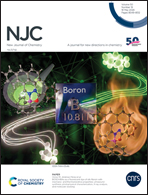
Covalent Locking of Carbon Dots in Imprinted Chitosan Gel Beads for Reusable, Visual Tetracycline Detection
Abstract
This work presents a reusable and visual sensing platform for tetracycline (TC) detection by covalently locking carbon dots (CDs) within molecularly imprinted chitosan gel beads. The key to this design is the use of epichlorohydrin (ECH) as a dual-role agent, which simultaneously crosslinks the chitosan network and forms stable covalent bonds with the CDs. This "covalent locking" strategy not only prevents fluorophore leaching but also induces a permanent blue-shift in the CDs emission from red to green, creating an intense and stable visual signal under UV light. Coupled with the TC-selective cavities created by molecular imprinting, the resulting gel beads exhibit concentration-dependent fluorescence quenching with high specificity. The sensor achieves a low detection limit of 12.23 nM (spectrometric) and, importantly, enables onsite quantitative analysis via a smartphone by monitoring the attenuation of the green emission, yielding a comparable detection limit of 10.69 nM. Demonstrating excellent robustness over a wide range of pH and ionic strength, the sensor retains over 90% of its initial response after 10 regeneration cycles. It was successfully applied to the analysis of spiked milk samples with accurate recoveries (97.3-103.2%) and high reproducibility (RSD ≤ 2.64%). This study highlights a straightforward yet effective material design paradigm where covalent immobilization and molecular imprinting are synergistically integrated to create stable, reusable, and equipment-light sensors for point-of-care applications.
 Please wait while we load your content...


