


Amphotericin B encapsulation and controlled release from PSSA-b-PMAV micelles for anti-leishmanial treatment
 *a
*a
Abstract
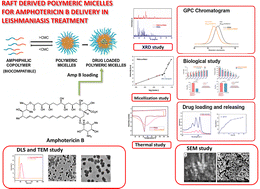
Amphiphilic block copolymers are increasingly utilised in nanomedicine due to their ability to self-assemble into micelles that effectively encapsulate hydrophobic drugs. In this study, we present the synthesis and comprehensive characterisation of a novel amphiphilic block copolymer comprising poly(styrene sulfonic acid) (PSSA) as the hydrophilic segment and poly(methacryloyl valine) (PMAV) as the hydrophobic block. The PSSA segment was synthesised via RAFT polymerisation using a trithiocarbonate-based chain transfer agent, enabling controlled molecular architecture. PMAV was derived from L-valine, a naturally occurring, biocompatible amino acid, contributing hydrophobicity. The resulting PSSA-b-PMAV copolymer was characterised using NMR, FTIR, GPC, DSC, TGA, XRD, DLS, and TEM. Micelle formation in aqueous solution was confirmed by fluorescence spectroscopy using pyrene as a probe, and the critical micelle concentration (CMC) was determined. Amphotericin B (Amp B), a hydrophobic antifungal agent with known systemic toxicity, was successfully encapsulated into the micellar core. Encapsulation significantly enhanced Amp B's aqueous solubility and reduced its cytotoxicity, as demonstrated by in vitro assays. The hydrophilic PSSA corona provided excellent colloidal stability, while the PMAV core enabled efficient drug loading and sustained release. Overall, the study establishes PSSA-b-PMAV as a promising, biocompatible nanocarrier platform for the delivery of water-insoluble therapeutic agents.
 Please wait while we load your content...


