


 PLATFORM UPDATE:


A biomimetic nanoclay hydrogel with cascade catalytic and photothermal functions for wound therapy
 *abc
*abc
Abstract
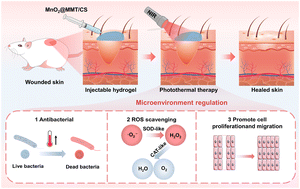
Infected wounds pose a significant clinical challenge, primarily due to a hostile microenvironment characterized by persistent oxidative stress, bacterial infection, and disrupted tissue regeneration. Herein, we developed a biomimetic nanoclay-based hydrogel composed of MnO2@montmorillonite/chitosan (MnO2@MMT/CS), designed to comprehensively remodel this pathological niche. Beyond serving as a structural scaffold, the nanoclay MMT acts as an electronic modulator that optimizes the catalytic activity of MnO2, enabling efficient reactive oxygen species (ROS) scavenging through superoxide dismutase (SOD)- and catalase (CAT)-like cascade reactions. Incorporated into a chitosan matrix, the nanocomposite replicates the three-dimensional hydrous architecture of the native extracellular matrix (ECM). Under near-infrared (NIR) irradiation, the hydrogel exhibits potent photothermal antibacterial activity. In vitro assessments demonstrated excellent biocompatibility and enhanced cell migration, while in vivo studies on infected wound models revealed accelerated wound closure, promoted collagen deposition, and improved tissue regeneration, with negligible systemic toxicity. Taken together, the MnO2@MMT/CS hydrogel represents a multifunctional microenvironment regulator, achieving synergistic antioxidant, antibacterial, and pro-regenerative outcomes for effective wound management.
 Please wait while we load your content...


