


Reaction pathway identification through computer-aided molecular design to enhance phenol production from bio-oil

Abstract
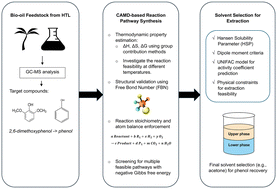
The growing demand for sustainable energy sources has intensified interest in biomass conversion technologies such as hydrothermal liquefaction (HTL), which enables the efficient processing of wet biomass into bio-oil without the need for energy-intensive drying. However, the complexity and instability of raw bio-oil significantly limit its direct application as a renewable fuel or chemical feedstock. Bio-oil is also a source of several valuable chemicals such as phenol. The value of bio-oil as a source of phenol can be increased by converting some of the other components in bio-oil into phenol. This work develops a reaction pathway synthesis framework using computer-aided molecular design (CAMD) to increase the quantity of phenol in bio-oil. CAMD was employed to systematically design molecules that can convert target components in bio-oil into phenol through thermodynamically feasible reaction pathways. The developed approach simultaneously solves the thermodynamic feasibility conditions, atomic balances, and structural constraints for potential reactants and products. The design approach involves representing all relevant thermodynamic equations and feasibility criteria based on the molecular groups involved in the reactions. Target compounds for conversion were selected based on their presence in bio-oil and the feasibility of the associated reactions, and multiple feasible reaction pathways were generated. All identified pathways demonstrated negative Gibbs free energy values, confirming their thermodynamic viability. To recover phenol from the bio-oil, solvent screening and selection were performed, identifying acetone as the most suitable extraction solvent based on its solubility characteristics. Overall, this work highlights the critical role of CAMD in designing strategic reaction pathways and provides a foundation for future experimental validation and industrial application in sustainable bio-oil upgrading.
 Please wait while we load your content...


