


 PLATFORM UPDATE:


Synthesis and evaluation of lupeol-derived triterpenic azines as potential neuroprotective agents

Abstract
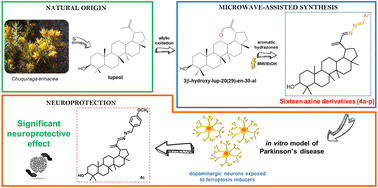
Parkinson's disease (PD) is a progressive neurodegenerative disorder characterized by the selective loss of dopaminergic neurons and the accumulation of α-synuclein aggregates. Current treatments are primarily symptomatic, highlighting the need for new neuroprotective strategies. Natural triterpenes have shown promise in neurodegenerative diseases, and structural modifications can enhance their bioactivity. In this study, we obtained a series of new triterpenic azines (4a–4p) from lupeol, optimizing reaction conditions through microwave-assisted synthesis. The neuroprotective potential of these derivatives was evaluated in human neuroblastoma IMR-32 cells exposed to 6-hydroxydopamine (6-OHDA), a widely used in vitro model of PD. Compounds 4c, 4m, and 4n significantly prevented 6-OHDA-induced cytotoxicity, restoring cell viability at 10 and 50 μM to control levels. Since ferroptosis is a cell death mechanism implicated in PD, we further examined the effects of these compounds in N27 dopaminergic neurons exposed to the ferroptosis inducers RSL3 and erastin. Among the tested derivatives, 4c exhibited a remarkable protective effect against RSL3-induced ferroptosis, which was comparable to ferrostatin-1, displaying an IC50 value of 9.1 μM. These findings support the development of triterpenic azines as neuroprotective agents and warrant further investigation in preclinical PD models.
 Please wait while we load your content...


