


 PLATFORM UPDATE:

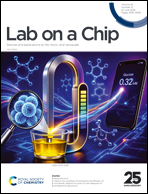
A real-time microfluidic surveillance system for multiplex detection of heavy metal contamination in wastewater
Abstract
Water pollution, particularly from heavy metals, poses a critical threat to ecosystems and human health. This study integrates the CRISPR-Cas12a system with MOF-based biobarcode technology to create a platform for the rapid, real-time and on-site detection of multiple heavy metal ions, demonstrating exceptional sensitivity and selectivity. The detection limits for Cu²⁺, Pb²⁺, and Hg²⁺ are 0.26 nM, 0.06 nM, and 0.80 nM, respectively.Inductively coupled plasma mass spectrometry (ICP-MS) analysis of real water samples confirmed the high accuracy and reliability of this method. Furthermore, a mobile phoneassisted portable device, paired with a microfluidic chip, facilitates real-time, rapid multichannel metal ion detection in resource-limited settings.
 Please wait while we load your content...


