


 PLATFORM UPDATE:


Engineering spatially defined extracellular matrix gradients to govern self-organized multicellular aggregates in a glioblastoma-on-a-chip
 †*a
Jingyun
Ma
*b
†*a
Jingyun
Ma
*b
Abstract
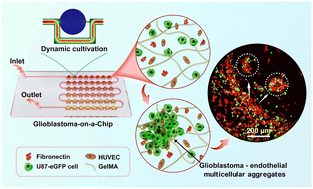
The spatial heterogeneity of biochemical cues within the tumor microenvironment (TME) critically influences cancer progression and therapeutic resistance. However, existing models often lack the capacity to generate stable, quantitative concentration gradients in a high-throughput and biomimetic manner. Here, we present a glioblastoma-on-a-chip platform featuring a 48-microwell array that enables spontaneous formation of spatially defined extracellular matrix (ECM) gradients through a structure-guided solution replacement process. This integrated strategy combines gradient generation, sample arraying, and gel solidification into a single step, allowing one-step fabrication of gelatin methacryloyl (GelMA) microgel arrays with 48 discrete concentration conditions. We successfully generated continuous fibronectin (FN) gradients, quantitatively validated with a linear standard curve (R2 = 0.9899) and categorized into five statistically distinct groups (**p < 0.01). Computational fluid dynamics simulations confirmed physiological flow perfusion in the microchannels, providing essential biophysical TME cues. When applied to 3D dynamic co-culture of U87 glioblastoma and vascular endothelial cells (HUVECs), the FN gradient critically regulated the formation of self-organized multicellular aggregates, showing strong concentration dependence in their probability, number, and size. These aggregates exhibited significant upregulation of cancer stem cell markers (CD133, Vimentin, α-SMA), with CD133 expression increased by over 559-fold compared to the control group. Compared to conventional 96-well plate MTT assays, the multicellular aggregates demonstrated enhanced resistance to temozolomide, highlighting its utility for drug response studies in a physiologically relevant context. This work establishes a robust platform for constructing quantitative ECM gradients and serves as a potential tool for investigating cell–ECM interactions and high-throughput drug screening within biomimetic TMEs.
 Please wait while we load your content...


