


 PLATFORM UPDATE:

Photocatalytic water-donating transfer semi-hydrogenation of alkynes coupled with glycerol oxidation over Pd-TiO2

Abstract
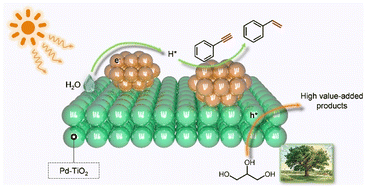
The semi-hydrogenation of alkynes to alkenes is a critical process in the synthesis of fine chemicals, pharmaceuticals, and agrochemicals. However, conventional hydrogenation methods face significant safety concerns due to the use of high-pressure hydrogen. While photocatalytic transfer hydrogenation with water as the proton source represents a promising green alternative to traditional methods, its reliance on hole sacrificial agents has hindered the efficient utilization of photogenerated holes, failing to fully exploit the intrinsic oxidation potential. Herein, we report a novel photocatalytic water-donating transfer hydrogenation system that integrates the semi-hydrogenation of alkynes with the oxidation of glycerol over a TiO2-supported palladium photocatalyst (Pd-TiO2). This system achieves 96% conversion of phenylacetylene with 99% selectivity for styrene, alongside an excellent glycerol conversion rate (1.95 mmol g−1 h−1) to high-value-added products, including formic acid, dihydroxyacetone, and glyceraldehyde. Isotope-labeling experiments confirm that water serves as the hydrogen source for the semi-hydrogenation of alkynes. The Pd-TiO2 catalyst exhibits remarkable stability, retaining its activity over four consecutive cycles and displaying a broad substrate scope, efficiently converting aromatic alkynes with electron-donating or withdrawing groups into alkenes with high yields and selectivity. This work provides a sustainable and cost-effective approach for alkene production and biomass conversion, aligning with the principles of green and sustainable chemistry.
 Please wait while we load your content...


