


Sustainable lignin–hydroxymethyl furfural-based waterborne polyurethane adhesive with high bonding strength and weather resistance
 *ab
Rongxian
Ou,
d
*ab
Rongxian
Ou,
d
Abstract
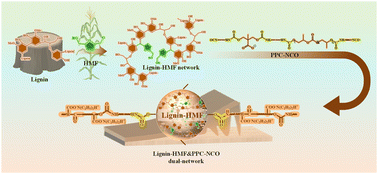
Conventional formaldehyde-based adhesives pose serious risks to the environment and human health. Lignin and hydroxymethylfurfural (HMF) show great potential in the production of green, recyclable bio-based waterborne polyurethane adhesives, reducing reliance on fossil resources and minimizing environmental impact. However, lignin–furan resins typically exhibit low reactivity, brittleness, poor durability, and limited reprocessing ability, which constrain their practical application. In this work, low-molecular-weight alkali lignin obtained by ethanol extraction was demethylated to increase the phenolic-OH content, reduce steric hindrance, and enhance reactivity toward HMF. The modified lignin and HMF fully replaced phenol and formaldehyde to construct a bio-based resin, and a flexible isocyanate-terminated carbon dioxide copolyester oligomer was introduced as a toughening agent. During curing, HMF preferentially condenses at the ortho/para positions of lignin phenolic hydroxyl groups, while –NCO/–OH reactions form urethane and phenolic carbamate linkages. These synergistic pathways increase the cross-linking density and network stability, affording high lap-shear strength (>16 MPa), weathering durability, reusability and ethanol-assisted recyclability while avoiding high-boiling organic solvents. This strategy achieves, for the first time, the synergistic integration of high-phenolic lignin with HMF, providing a general route to high-performance, recyclable, bio-based waterborne polyurethane adhesives.
 Please wait while we load your content...


