


 PLATFORM UPDATE:

Direct allylic C(sp3)–H acylation of alkenes via metallaphotoredox catalysis using carboxylic acids
 *abc
and
Bo
Yang
*ab
*abc
and
Bo
Yang
*ab
Abstract
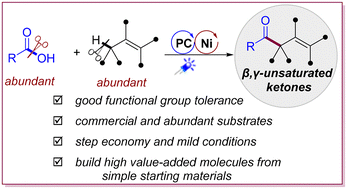
The direct catalytic coupling of feedstock chemicals to construct complex scaffolds is a central challenge in synthetic chemistry. Here, we report a metallaphotoredox strategy enabling direct allylic C(sp3)–H acylation of alkenes using carboxylic acids as versatile acylating agents. This nickel/photoredox dual catalytic system operates under mild conditions and merges two abundant substrates, carboxylic acids and unactivated alkenes, to construct β,γ-unsaturated ketones, privileged motifs in bioactive molecules, via a mechanistically distinct pathway that bypasses traditional prefunctionalization requirements. Key to this transformation is the synergistic generation of bromine radicals from a nickel-bound bromide, which selectively abstract allylic hydrogen atoms, and the subsequent interception of transient allyl radicals by acyl–Ni(II) intermediates. The reaction exhibits broad scope and enables the programmable synthesis of bis(β,γ-unsaturated ketones) from dicarboxylic acids. This work establishes a platform for C(sp3)–H acylation with high atom- and step-economy, offering a general disconnection for carbonyl–alkene linkages.
 Please wait while we load your content...


