


 PLATFORM UPDATE:


Sturgeon roe protein hydrolysate alleviates cyclophosphamide-induced ovarian dysfunction in mice with reduced ovarian oxidative–inflammatory injury, granulosa cell apoptosis, and HPO axis-related endocrine imbalance
 *a
and
Tiantian
Zhao
*b
*a
and
Tiantian
Zhao
*b
Abstract
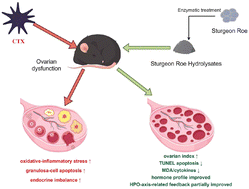
Chemotherapy-associated ovarian dysfunction is closely linked to oxidative–inflammatory injury of the follicular microenvironment, granulosa cell loss, impaired steroidogenesis, and destabilized hypothalamic–pituitary–ovarian (HPO) axis feedback. This study evaluated sturgeon roe protein hydrolysate (SPH) as a nutraceutical candidate in a cyclophosphamide (CTX)-induced premature ovarian failure (POF) mouse model. Female C57BL/6 mice were exposed to CTX to establish a POF model and subsequently administered SPH by oral gavage. Ovarian index, estrous cyclicity, ovarian histopathology, granulosa cell apoptosis (TUNEL), serum hormone profiles, ovarian oxidative stress and inflammatory markers, and gene expression signatures in the ovary and hypothalamus were assessed. CTX markedly reduced ovarian index, disrupted estrous cycling, increased granulosa cell apoptosis, and induced a marked endocrine disturbance characterized by decreased AMH, cAMP, estradiol, and testosterone levels with compensatory elevations of GnRH, FSH, LH, and the FSH/LH ratio. CTX also increased lipid peroxidation and inflammatory cytokines while impairing antioxidant defense. SPH significantly increased the reduced ovarian index, partially improved estrous cyclicity and representative ovarian histological appearance, and suppressed granulosa cell apoptosis, accompanied by a lower ovarian Bax/Bcl-2 mRNA ratio. SPH attenuated ovarian oxidative stress and inflammatory activation and partially corrected circulating hormone abnormalities and HPO axis-related feedback indices. Notably, at the transcriptional level, SPH improved selected ovarian apoptosis-related gene expression signatures, and hypothalamic Mapk1 showed a responsive recovery; however, broad hypothalamic transcriptional remodeling was not observed. Collectively, these results support that SPH improves CTX-induced ovarian dysfunction mainly in association with ovarian stress containment, apoptosis-related improvement, and endocrine rebalancing, while protein-level validation of cleaved caspase-3, p-ERK, STAR, and CYP19A1 remains required.
 Please wait while we load your content...


