


 PLATFORM UPDATE:


Amelioration of diet-induced hyperglycemia by wheat peptides in a multi-target manner: integrated modulation of inflammation, lipid metabolism, gut microbiota, and DPP-IV inhibition

Abstract
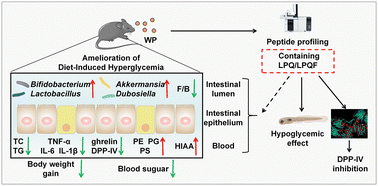
Wheat peptides (WP) have been claimed to have the potential to regulate metabolism and effectively prevent/mitigate gut microbiota dysbiosis. However, many studies into the effects of WP on hyperglycemia have provided conflicting findings, and the underlying mechanism has been elusive. In this study, WP intervention (50–1000 mg kg−1) dose-dependently attenuated high fat diet (HFD)-induced weight gain, fasting hyperglycemia, glucose intolerance and insulin resistance. WP suppressed systemic inflammation by normalizing serum levels of lipopolysaccharide (LPS), tumor necrosis factor-α (TNF-α), and interleukin-1β (IL-1β), while concurrently reducing adipocyte hypertrophy and hepatic steatosis. Serum lipid profiles were improved, with significant reductions in total cholesterol (TC) and triglycerides (TG), though low-density lipoprotein (LDL) and high-density lipoprotein (HDL) levels remained unaltered. Although gut microbiota α-diversity was unaffected, WP modulated microbial composition by decreasing the Firmicutes/Bacteroidota ratio and enriching beneficial genera, including Bifidobacterium and Lactobacillus. Metabolomic analyses further revealed that WP-restored metabolic homeostasis is associated with upregulating functional lipids [PE(18 : 1/20 : 3), PG(18 : 0/20 : 4), and PS(22 : 6/22 : 1)] and the tryptophan metabolite 5-HIAA, all of which exhibited inverse correlations with indices of metabolic dysfunction. Critically, the WP-derived peptides LPQ and LPQF, characterized by a proline residue at the second position (Pro2), exhibited potent dipeptidyl peptidase-IV (DPP-IV) inhibitory activity, mediated by high-affinity binding involving van der Waals forces, hydrogen bonding, and electrostatic interactions. Furthermore, in hyperglycemic zebrafish models, LPQ/LPQF (0.1–5 μg mL−1) normalized glycemic levels. Collectively, WP exerts hypoglycemic effects through potentially synergistic mechanisms: (i) suppression of inflammation, (ii) restoration of functional lipid and tryptophan metabolic pathways, (iii) modulation of the gut microbiota toward a beneficial profile, and (iv) DPP-IV inhibition by structurally optimized peptides. These findings highlight WP's therapeutic potential for metabolic syndrome, underscoring its utility as a multifaceted intervention for metabolic dysregulation.
 Please wait while we load your content...


