


Bifidobacterium longum supplementation prevents intestinal inflammation and cognitive impairment in sleep-deprived mice by modulating clock gene expression

Abstract
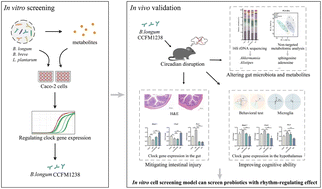
Probiotics have shown potential for alleviating circadian disruption, but efficient screening models for identifying effective strains are lacking, and the mechanisms by which probiotics modulate circadian disruption and related diseases require further investigation. In this research, we developed an in vitro screening model targeting clock gene expression and identified Bifidobacterium longum CCFM1238 as an effective strain for alleviating circadian disruption in sleep-deprived mice. B. longum CCFM1238 exhibited a rhythm-regulating effect similar to melatonin in vitro and alleviated both intestinal and hypothalamic clock gene disruption (Bmal1, Clock, Per3, Cry1 and Rev-erbα) in sleep deprivation-induced circadian disruption mice. Further studies showed that B. longum CCFM1238 reduced inflammatory cell infiltration in colonic tissue, increased colonic goblet cell numbers, and repaired sleep deprivation-induced intestinal inflammation. In cognitive ability tests, B. longum CCFM1238 ameliorated spatial recognition and memory deficits induced by circadian disruption and attenuated extensive microglial activation in the hippocampal region. Additionally, B. longum CCFM1238 increased the abundance of beneficial bacteria (Akkermansia, Alistipes, and Bifidobacterium) and modulated levels of key metabolites (sphingosine, adenosine, guanosine, N,N-dimethylglycine, and inosine) strongly associated with key microbiota. These findings suggest that B. longum CCFM1238 may target clock gene expression to alleviate circadian disruption and modulate the gut microbiota to provide neuroprotection and gut barrier protection against circadian disruption.
 Please wait while we load your content...


