



Effect of PAC-embedded fillers coupled with electrochemical systems on nitrogen transfer pathways and removal
 *a
*a
Abstract
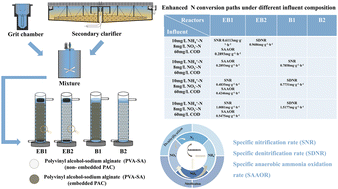
To enhance electron donor utilization efficiency for advanced nitrogen removal from low carbon-to-nitrogen (C/N) ratio wastewater, polyvinyl alcohol–sodium acetate (PVA–SA) fillers embedded with powdered activated carbon (PAC) were developed and implemented in four lab-scale biofilters treating synthetic effluents from grit chamber and secondary clarifier outputs. Nitrogen removal performance and microbial community dynamics were systematically investigated. The electrochemical biofilter with embedded PAC fillers (EB1) significantly enhanced electron transfer, with nitrogen conversion pathways influenced by the concentrations and types of electron acceptors and donors. Nitrification was suppressed when electron donors (NH4+–N and COD) were present, while denitrification was inhibited under excess NO3−–N conditions. Although non-embedded PAC fillers favored enriching nitrifiers including Nitrosomonas and Nitrospira, and denitrifiers, such as Thauera, Comamonadaceae and Dechloromonas, the electrochemical biofilter facilitated greater accumulation of electrochemically active bacteria on anode plates, including Geobacter (11.64–14.10%), Desulfuromonas (5.88–10.85%) and Pseudomonas (15.15–17.53%). When the influent contained 13 mg L−1 NH4+–N, 8 mg L−1 NO3−–N and 77 mg L−1 COD, Candidatus_Brocadia (0.49–0.61%) was enriched in EB1, and the average contribution of nitrogen conversion via anaerobic ammonia oxidation (anammox) was 10.79% higher than in the non-embedded PAC biofilter. This study offered theoretical insights into optimizing nitrogen removal in low C/N wastewater treatment by enhancing electron donor utilization and promoting functional microbial populations.
 Please wait while we load your content...


