


 PLATFORM UPDATE:


Thermal treatment options for biosolids management: a critical review

Abstract
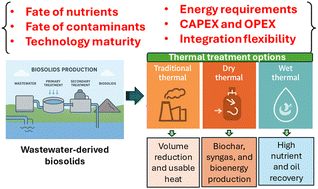
Thermal treatment of biosolids is receiving significant attention in the water industry as an alternative management option to land application. Traditional thermal treatment processes for biosolids management include drying and incineration, whereas emerging thermal technologies comprise dry thermal processes, such as pyrolysis and gasification, and wet thermal processes, such as hydrothermal carbonisation/liquefaction and supercritical water gasification. Thermal treatment is considered an efficient approach for the volume reduction of biosolids, contaminant destruction, and valuable product generation. However, there is a clear gap in the literature in benchmarking the range of available technologies, considering their techno-economic viability, emission potential, resource (energy and nutrient) recovery, and contaminant reduction. This knowledge is crucial for understanding the techno-commercial readiness, integration flexibility, and potential adoption of the thermal treatment technologies for biosolids management in wastewater treatment facilities. This critical review provides a comprehensive comparison of the various thermal treatment processes based on the parameters such as fate of nutrients and emerging contaminants, emissions, energy requirement, capital and operating expenditures, and scale-up maturity. It was found that dry thermal processes have substantial benefits over traditional incineration technologies, with pyrolysis and gasification being more energy-efficient and providing opportunities to generate valuable products (biochar and bioenergy). Hydrothermal liquefaction offers further benefits with high bio-oil and nutrient recovery and strong synergies with the existing water treatment infrastructures. Gasification and pyrolysis have high technology- and commercial-readiness level for biosolids treatment, making them suitable for the wastewater treatment industry. However, to ensure efficient and sustainable management of biosolids through thermal processes, there are some techno-commercial challenges, which are highlighted as future research perspectives.
- This article is part of the themed collection: Environmental Science: Water Research & Technology Recent Review Articles
 Please wait while we load your content...


