


Surface water microbiome response to pyrogenic carbon after a wildland–urban interface fire

Abstract
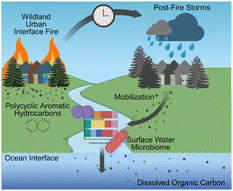
Fires in the wildland–urban interface (WUI) introduce pyrogenic organic contaminants to surface waters, but their impacts on microbial dynamics have not been evaluated. We studied the interactions between microbial communities and pyrogenic carbon during post-fire storms in a WUI fire-impacted creek in Orange County, CA. The first storms following the fire (low intensity) brought about the highest discharges of polycyclic aromatic hydrocarbons (PAHs), e.g. benzo[a]pyrene, benz[a]anthracene. Dissolved organic carbon (DOC) loads reached up to 11.2 g-C s−1 during the more severe storms. PAHs correlated with each other but not with DOC or fluctuations in turbidity, suggesting these two variables might not be good predictors of PAH flushes, especially in low-intensity storms. Microbial genera with known PAH-degrading members were differentially abundant during post-fire storms (Pseudomonadota, Bacteroidota, Cyanobacteriota, Actinobacteriota, Bacillota). In addition, predicted metabolic pathways related to the PAH biodegradation intermediates, catechol and protocatechuate, increased significantly at sites downstream of the fire. Overall, our findings suggest pyrogenic carbon from the fire resulted in a detectable shift in microbial community function and composition to favor PAHs degradation just a few months after the fire. This response suggests that PAH-degrading microorganisms are readily found after WUI fires.
 Please wait while we load your content...


