


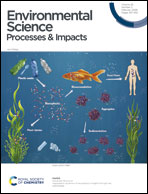
Comparison of the enhanced roles of a chemical surfactant and a bio-surfactant in the adsorption of tetracycline onto iron oxides

Abstract
The environmental fate of tetracycline (TC, a widely used antibiotic) may be influenced by iron oxide particles and surfactants, which are common in aquatic systems. Currently, the impacts of co-existing surfactants (e.g., chemical and bio-surfactants) on TC adsorption to iron oxides remain poorly understood. This study employed two representative anionic surfactants—sodium dodecyl sulfate (SDS, a synthetic chemical surfactant) and rhamnolipid (Rha, a common glycolipid biosurfactant) to investigate their influences on TC adsorption behaviors onto two typical iron oxide minerals (goethite and hematite). Generally, goethite exhibited a higher affinity for TC than hematite, which was caused by the different surface area and surface charges of the two minerals. Interestingly, both surfactants facilitated TC adsorption through the surfactants' bridging effects. Meanwhile, the degree of the promotion impacts of surfactants (Rha or SDS) on TC adsorption was iron oxide type-dependent (goethite > hematite), which was related to diverse adsorbed amounts of surfactants on iron oxides. Note that SDS demonstrated a superior influence on TC adsorption than Rha, which was ascribed to the fact that more TC could be bound to iron oxides in systems containing SDS due to the stronger bridging effect. Additionally, the magnitude of the surfactant-mediated enhancement of TC adsorption decreased progressively from pH 5.0 to 9.0 because of the diverse surfactant-binding abilities of iron oxides under various pH conditions. These findings advance the fundamental understanding of antibiotic behaviors and fate in soil–water systems containing ubiquitous surfactants.

 Please wait while we load your content...


