


 PLATFORM UPDATE:


Sources, geochemical characteristics, and control mechanisms of groundwater salinity: a case study of the Ulungur River Basin in northwest China
 *ab
*ab
Abstract
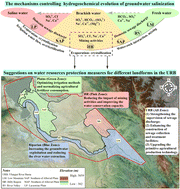
Groundwater salinisation in inland water-scarce areas exacerbates various ecological, environmental, and social issues. To obtain a comprehensive understanding of the primary mechanisms driving groundwater salinisation and the baseline water quality in the Ulungur River Basin (URB), this study integrated hydrochemical analysis, geostatistical methods, and multivariate statistical techniques. In addition, rational recommendations for the sustainable exploitation and protection of water resources were proposed. Analysis of the dissolved components revealed that groundwater chemistry was predominantly influenced by Na+ (365.62 mg L−1), Ca2+ (205.91 mg L−1), Mg2+ (62.18 mg L−1), Cl− (276.96 mg L−1), and SO42− (817.45 mg L−1). Groundwater in the Low Mountain region was categorised as freshwater, which gradually turned to saline water in the Lacustrine Plain along the flow direction, with hydrochemical types evolving from HCO3·SO4–Na·Ca and SO4·HCO3–Na·Ca (Mg) to SO4–Na·Ca and SO4·Cl–Na·Ca. Principal component analysis identified four principal components (PCs) that collectively accounted for 80.53% of the total cumulative variance in the key determinants of groundwater salinisation. PC1 represented water–rock interactions (which included carbonate and evaporite dissolution or precipitation and cation exchange). PC2 represented the degradation of organic matter and the application of farm manure. PC3 was associated with the return flow of irrigation water and lateral recharge. PC4 involved domestic sewage discharge and fertiliser application. The calculated values of the water quality index indicated that 47% of the samples, classified as having either excellent or good water quality, were suitable for drinking. Furthermore, the results of the permeability index, sodium adsorption ratio, residual sodium carbonate, and potential salinity indicated that both river water and groundwater within the riparian zone were safe and suitable for irrigation purposes. Overall, reducing river water extraction, upgrading agricultural production technologies, and enhancing domestic sewage treatment capacities are key strategies for protecting water resources in the URB.
 Please wait while we load your content...


