


 PLATFORM UPDATE:


In vitro and in vivo inhibition of amyloid β aggregation by a Ru(ii)–naphthalene diimide complex

Abstract
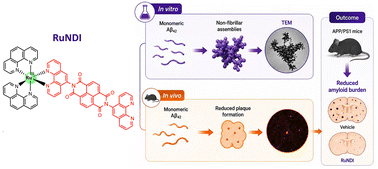
Amyloid deposits of amyloid-β (Aβ) and hyperphosphorylated tau are pathological hallmarks of Alzheimer's disease (AD), which accounts for most dementia cases worldwide. This study investigates the effect of the complex [Ru(phen)2(pNDIp)]2+ (RuNDI; phen = 1,10-phenanthroline, pNDIp = N,N′-di(1,10-phenanthroline)–1,4,5,8-naphthalenetetracarboxylic diimide) on Aβ aggregation in vitro and in vivo. In vitro, RuNDI markedly attenuated Aβ42 aggregation, as shown by nephelometry, circular dichroism, and transmission electron microscopy, by suppressing β-sheet formation and promoting amorphous assemblies. In vivo, immunofluorescence analysis using Thioflavin-S and the 4G8 antibody in transgenic APP/PS1 mice treated with RuNDI (0.1 mg kg−1 day−1, intraperitoneally, for 10 weeks) revealed that, while RuNDI did not affect the size of existing amyloid plaques, it significantly decreased plaque density and burden in the cortex and hippocampus of treated mice. These findings suggest that RuNDI interferes with Aβ aggregation and may be further investigated for modifying plaque pathology.
 Please wait while we load your content...


