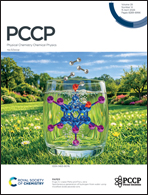
Cathodo- and X-ray excited luminescence of Europium Tri- and Tetracarboxybenzoates and Phenanthroline

Abstract

Two europium(III) coordination compounds based on tri- and tetracarboxybenzene ligands (H3btc and H4btec) and 1,10-phenanthroline were synthesized and thoroughly characterized. Both complexes display characteristic Eu3+ photoluminescence with high quantum yields (22% and 41%). Cathodoluminescence studies revealed bright and stable emission up to 9 kV, with the btec-based complex exhibiting higher intensity and greater resistance to electron-beam-induced degradation. Most notably, thin films of the btec complex demonstrate robust X-ray-induced luminescence (XRL) under 40–90 kV excitation. XRL intensity increases linearly with both voltage and current, and remains spectrally stable over prolonged exposure, with minimal performance loss. These results highlight the role of ligand structure and complex stability in high-energy-excited luminescence and suggest promising applications of Eu3+-polycarboxylate frameworks in X-ray sensing and imaging devices.

Supplementary files

Transparent peer review

To support increased transparency, we offer authors the option to publish the peer review history alongside their article.

View this article’s peer review history

Article information

Article type
Communication
Submitted
17 Dec 2025
Accepted
29 Mar 2026
First published
30 Mar 2026

Phys. Chem. Chem. Phys., 2026, Accepted Manuscript

Cathodo- and X-ray excited luminescence of Europium Tri- and Tetracarboxybenzoates and Phenanthroline

Y. Yin, A. S. Goloveshkin, D. Kopytov, A. Parashuk, E. Latipov, Z. Guo, I. Khanbekov, Y. Zhu and V. V. Utochnikova, Phys. Chem. Chem. Phys., 2026, Accepted Manuscript , DOI: 10.1039/D5CP04909A

To request permission to reproduce material from this article, please go to the Copyright Clearance Center request page.

If you are an author contributing to an RSC publication, you do not need to request permission provided correct acknowledgement is given.

If you are the author of this article, you do not need to request permission to reproduce figures and diagrams provided correct acknowledgement is given. If you want to reproduce the whole article in a third-party publication (excluding your thesis/dissertation for which permission is not required) please go to the Copyright Clearance Center request page.

Read more about how to correctly acknowledge RSC content.

Social activity

Spotlight

Advertisements