


Mechanistic insights into pH-dependent ofloxacin adsorption on nanoporous carbons

Abstract
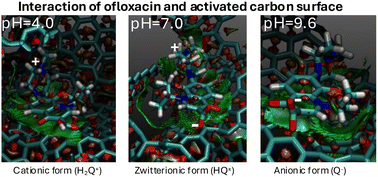
The adsorption of large organic molecules such as ofloxacin onto disordered nanoporous carbons presents significant challenges due to the complex interplay of adsorbate–adsorbent charge interactions, molecular dipole moments, pH-dependent speciation, and high electronegativity effects. Understanding these mechanisms is critical for the design of efficient water remediation systems targeting pharmaceutical micropollutants. This study employs a multi-scale modeling approach combining density functional theory (DFT) calculations, Hybrid Reverse Monte Carlo (HRMC) simulations, Grand Canonical Monte Carlo (GCMC), and molecular dynamics (MD) simulations to elucidate the mechanisms governing ofloxacin adsorption under varying pH conditions. The computational results are validated against experimental adsorption data across acidic, neutral, and basic solutions. Under acidic conditions, the positively charged H2Q+ species experiences only weak electrostatic repulsion from the carbon surface, allowing favorable π–π stacking and van der Waals forces to drive substantial adsorption, a behavior directly relevant to acidic industrial effluents. In basic solutions, the negatively charged Q− species experiences significantly greater electrostatic repulsion, amplified by fluorine's high electronegativity, severely limiting adsorption performance. Under neutral conditions, a mixture of four ofloxacin forms dominated by zwitterionic species with high dipole moments, combined with reduced carbon surface charge, yields adsorption performance equivalent to or exceeding acidic conditions. These findings provide design principles for pH-tuned nanoporous carbon adsorbents in real water remediation processes, demonstrating that optimal removal of fluorinated quinolones can be achieved by controlling solution pH and tailoring carbon surface functionalization.
 Please wait while we load your content...


