


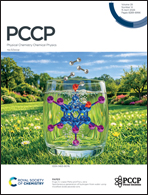
Trimetallic metal–organic frameworks for CO2 reduction reactions
 *a
and
*a
and
Abstract
Trimetallic metal–organic frameworks (MOFs) represent a novel class of materials that outperform their monometallic and bimetallic counterparts by providing cooperative catalysis, enhanced electron transport, and improved binding of reaction intermediates. Monometallic MOFs provide simple but limited active sites, bimetallic MOFs enhance performance through synergistic interactions, whereas trimetallic MOFs combine the advantages of mono- and bimetallic MOFs to deliver the greatest tunability and cooperative effects for superior CO2 reduction reactions (CO2RR) activity and selectivity, albeit with increased synthetic complexity. This study presents an evaluation of trimetallic MOFs for catalytic CO2RR, focusing on preparation methodologies, electronic structure modulation, diversity, structural multifunctionality, and catalytic performance. By comparing several trimetallic systems, we clarify the roles and synergistic interactions of the constituent metals, emphasizing the distinct structural and functional benefits of trimetallic structures. Notwithstanding considerable advancements, obstacles persist in comprehending the intricate structure–activity interactions owing to compositional complexity. Advanced characterization techniques, including high-resolution electron microscopy and operando spectroscopy, with theoretical modeling, are crucial for clarifying active site behavior under operational conditions. The reported studies on the electrochemical CO2RR on trimetallic MOFs have shown up to 95% FE for CO at −0.75 V vs. RHE, while the photocatalytic CO2RR (visible light) demonstrated the production of CH3OH at a rate of ≈41.05 µmol h−1 g−1 and CH3CH2OH at a rate of ≈36.62 µmol h−1 g−1. This study highlighted that both photocatalytic and electrocatalytic CO2RR on trimetallic MOFs are still in their nascent stage, emphasizing the pressing necessity for more studies. Principal challenges, prospects and research gaps, including the synthesis and the corresponding composition control and phase uniformity, stability under operating conditions, selectivity and efficiency aspects, roles of various metal centers, mechanistic aspects, rational design of active sites and controlled synergy, integration of trimetallic MOFs into hybrid systems and functional devices, and environmental and economic factors, were identified to unlock the full potential of trimetallic MOFs in CO2RR.

- This article is part of the themed collections: 2026 PCCP Reviews and PCCP 2025 Emerging Investigators
 Please wait while we load your content...


