


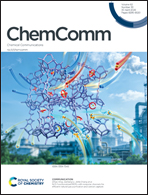
Electrocatalysis through the lens of CISS: from fundamentals to advanced aspects of energy conversion

Abstract
The chiral-induced spin selectivity (CISS) effect has emerged as a potentially groundbreaking concept in electrocatalysis. It establishes a connection between molecular chirality and spin-dependent electron transport that influences reaction kinetics. In this review, we examine the influence of CISS across multiple scales, from fundamental mechanisms, like the enhancement of spin–orbit coupling through chiral molecular and lattice arrangements, to its impact on overall electrocatalytic performance. We highlight strategies for incorporating chirality into inorganic and hybrid catalytic systems and examine how these approaches influence spin polarization to improve catalytic activity, selectivity, and energy efficiency. Key electrochemical reactions, including oxygen evolution (OER), oxygen reduction (ORR), hydrogen evolution (HER), and carbon dioxide reduction (CO2RR), serve as representative case studies, highlighting the practical effects of CISS-mediated spin control. Finally, we outline emerging opportunities and challenges for leveraging CISS, realizing its practical impact in next-generation energy conversion technology reactions as well as nitrogen fixation and hydrogenation reactions.

- This article is part of the themed collection: ChemComm Electrocatalysis
 Please wait while we load your content...


