


Sulfur- or selenium-substituted Nile blue-based superoxide radical generators for precise photodynamic therapy and immunotherapy

Abstract
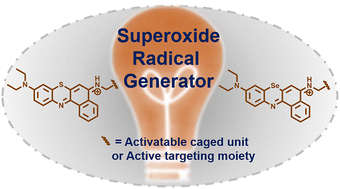
Photodynamic therapy (PDT) and immunotherapy have emerged as leading practices in the treatment of cancer in the fields of biology and medical sciences. Nevertheless, most photosensitizers exhibit off-targeting, which renders them unable to achieve precise and efficient cancer therapy. Additionally, the hypoxic tumor microenvironment restricts the generation of singlet oxygen, thereby limiting the effectiveness of type II PDT. Unlike traditional type II photosensitizers, type I photosensitizers that generate superoxide radicals have garnered significant attention for photoimmunotherapy. A few systematic elucidations have been reported thus far, focusing on sulfur- or selenium-substituted Nile blue-based type I superoxide radical generators designed to potentiate photo-immunotherapy. This feature article provides a comprehensive overview of the latest achievements in the development of sulfur- or selenium-substituted Nile blue-based superoxide radical generators, aiming to facilitate the design of precise type I photosensitizers for accurate photoimmunotherapy. The present challenges and future explorations of photoimmunotherapy are also carefully deliberated, with the hope that this work will inspire more researchers to explore innovative clinical applications using Nile blue analogue-based superoxide radical materials.
 Please wait while we load your content...


