


Recent advances in photochemical diradical hydrogen atom transfer (DHAT) reactions of C–H bonds
 *a
*a
Abstract
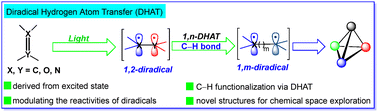
In recent years, with the great resurgence and dramatic evolution of photochemistry, photochemical hydrogen atom transfer (HAT) has emerged as a versatile strategy for C–H bond functionalization, unlocking reaction pathways that are inaccessible under traditional thermal conditions. Despite the great development and vibrant employment of this area, such processes driven by highly reactive diradicals via energy transfer remain significantly underdeveloped compared to those initiated by single-electron transfer (SET) strategies. Given the considerable potential and diverse chemical reactivity of these transformations, we recently established the concept of diradical hydrogen atom transfer (DHAT) as a distinct mechanistic paradigm that offers more opportunities and enhanced capabilities for C–H bond functionalization. In this review, we summarize and highlight recent advances (since 2020) in this field, with the aim of inspiring further innovative developments via such a strategy in C–H functionalization chemistry.
 Please wait while we load your content...


