


 PLATFORM UPDATE:

An esterase-activated celastrol delivery system suppressed steatosis-related hepatocellular carcinoma progression

Abstract
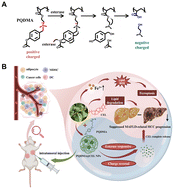
The etiological landscape of hepatocellular carcinoma is shifting markedly, with metabolism-associated fatty liver disease (MAFLD) increasingly being regarded as a major pathogenic factor. The pathophysiological relationship between MAFLD and hepatocellular carcinoma (HCC) involves metabolic disorders, such as impaired lipid metabolism; thus, new strategies that simultaneously target abnormal lipid metabolism and HCC are urgently needed. Celastrol (CEL), a traditional Chinese medicine, exhibits significant anticancer activity against various cancers, including HCC. In addition, as a metabolic modulator, CEL enhances leptin receptor sensitivity and improves glucose and lipid metabolism. Thus, we speculate that CEL could be a promising candidate for the effective treatment of steatosis-related HCC. However, the hydrophobicity and low bioavailability of CEL limit its clinical applications. To overcome these obstacles, we developed an esterase-activated CEL-loaded delivery system (PQDMA@CEL NPs) using the amphiphilic cationic polymer poly{N-[2-(acryloyloxy)ethyl]-N-[p-acetyloxyphenyl]-N,N-dimethylammonium chloride} (PQDMA). PQDMA@CEL NPs were efficiently internalized by both hepatocellular and hepatocellular carcinoma cells and underwent esterase-activated charge reversal to release CEL, inducing ferroptosis in HCC cells. Furthermore, in vitro studies showed that the lipid degradation efficacy of PQDMA@CEL NPs was 1.8-fold higher than that of free CEL in steatotic hepatocellular AML12 cells. In the Hepa1–6 bilateral tumor model, a single-site intratumoral injection of PQDMA@CEL NPs systemically boosted the anticancer efficacy. The tumor inhibition rate of PQDMA@CEL NPs was 72.4% for treated tumors and 65.8% for the distant untreated tumors. In summary, this approach provides new insights into the inhibition of steatosis-related HCC progression by inducing ferroptosis and decreasing lipid accumulation in HCC.
 Please wait while we load your content...


